
Film, penetrating, reseal coats
Concrete Sealing in Las Vegas
Desert sun breaks sealer down fast. Once it goes, color fades and stains soak in. We check what's on the slab now and how dry it is, then lay down a coat that suits it.
Call us(725) 502-1499
Mon to Sat, 7am to 7pm. Closed Sunday.
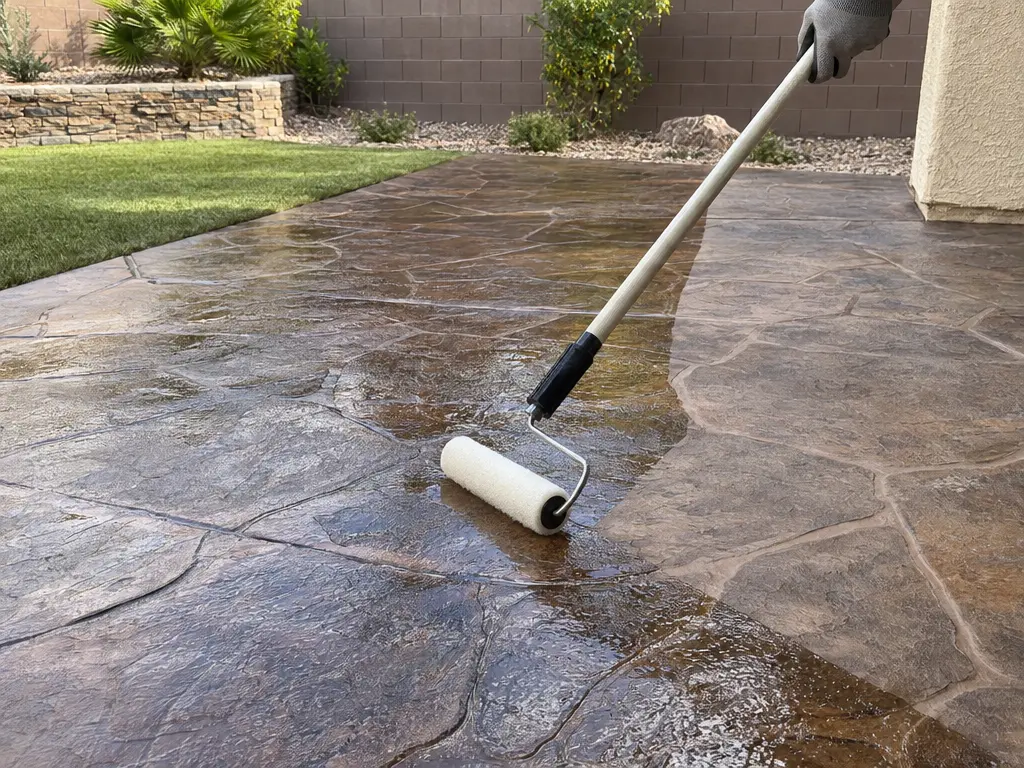
What comes with a sealing job
We also look at the old coat for peeling or milky spots, check for cracks worth fixing first, and tell you which type of sealer is on there now.
Old coat assessment
We find out whether the old sealer is film or penetrating, and how well it's holding.
Moisture check
Sealer goes on dry concrete only, since trapped moisture is what turns a fresh coat milky.
Curing compound check
On newer slabs we confirm the curing compound is compatible, or the new coat can peel.
Cleaning before coating
Dirt, oil and loose flakes come off so the sealer bonds to the concrete itself.
Product within county limits
Clark County caps concrete and masonry sealers at 100 g/L VOC, and product choice starts there.
A plan for the next coat
You get a date to think about, usually 2 to 3 years out for a patio in full sun.
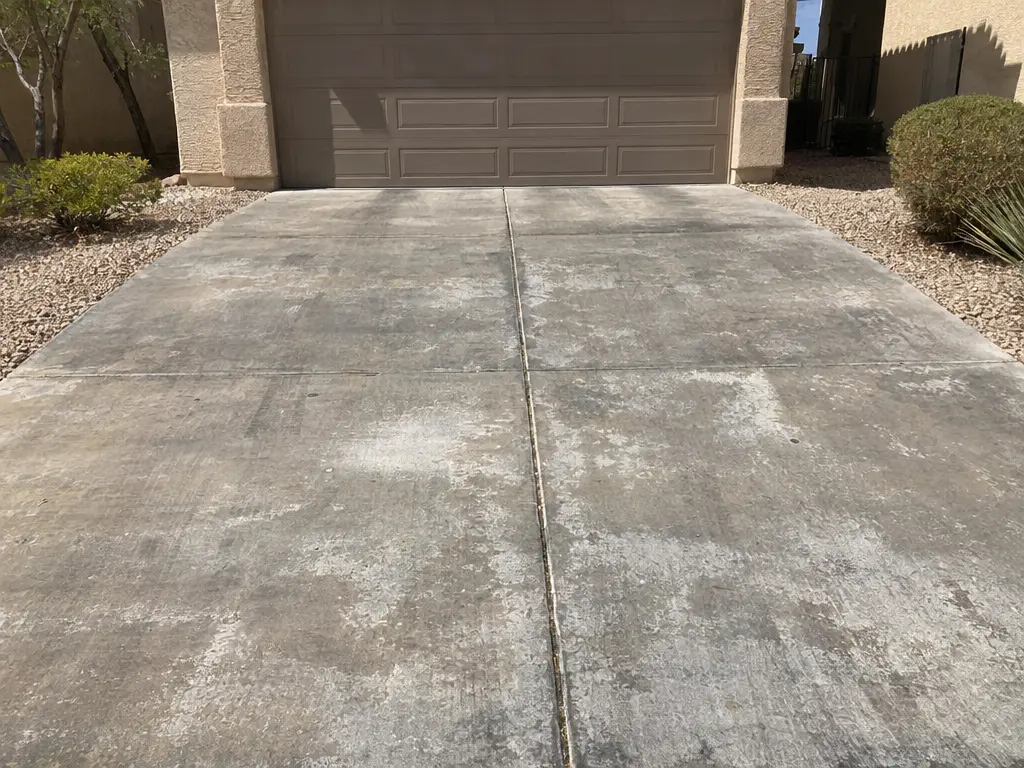
Why does sealer wear off so fast in Las Vegas?
Sealers will wear quickly in Las Vegas due to the full sun exposure almost every day of the year. Sealers will contain UV protection. Acrylic film sealers have an average life span of 1-3 years nationally. In the desert they will not last this long. Advice for Phoenix (very similar climate) recommends a reseal every one to two years on a sealed patio. This is how we plan our jobs. We plan a reseal around every 2-3 years on a sunny patio or stamped deck. Driveways will not last as long, around 1-2 years with an acrylic due to the tire wear. Polyurethane topcoats will last longer but are a more expensive material.
Sunny front driveways
Tires plus all-day sun wear acrylic coats down fastest, often within a year or two.
Stamped back patios
Patios in full sun need a fresh coat about every 2 to 3 years to keep their color.
Film-forming or penetrating sealer: which is on yours?
Look and touch tell you. A film sealer leaves a sheen and darkens the color like the slab is wet. A penetrating sealer leaves concrete looking bare, and water beads on top.
| What to compare | Film-forming | Penetrating |
|---|---|---|
| How it looks | Sheen and deeper color, the wet look | Natural finish, close to bare concrete with no shine |
| Where it sits | A coat on top of the surface | Soaks into the concrete and leaves no surface film |
| Time between coats | About 1 to 3 years in our sun | Much longer between applications than any film sealer |
| How it fails | Peels, flakes in sheets, or turns milky white | Slowly stops shedding water; nothing peels off |
| Best fit | Stamped and colored work you want vivid | Plain slabs where the look matters less |
Sealing questions we hear around Las Vegas
Most sealing calls start with one of these. Text a daylight photo of the slab and we'll tell you what's on it.
Can I seal my concrete driveway myself?
Yes. Many homeowners in Las Vegas will. Simply clean and allow to fully dry. Apply thin coats. Applying too much or sealing a damp slab will cause the new coat to look milky. A peeling old coat has to be stripped first.
What does driveway sealing cost here?
This will depend on the slab and what it currently has. The amount of square footage, amount of cleaning, stripping of a failing coat and what sealer you want will all affect the price. We will price a reseal as a separate job. Send us a photo and approximate size.
How often should concrete be resealed in Las Vegas?
Plan on every 2 to 3 years for a film sealer on a patio in full sun, and closer to every 1 to 2 years for an acrylic on a driveway. Label claims run longer, but Las Vegas sun shortens them. Penetrating sealers go much longer between coats.
Why did my new sealer turn cloudy or milky?
Mostly it will be due to trapped moisture. Sealing before the concrete has dried or sealing a damp slab will cause a white milky film to form. This can cause bubbling and lifting. The other cause is sealing over an incompatible or still-curing curing compound. The fix depends on the cause.
Are there rules on which sealers can be used in Clark County?
Yes. Clark County Air Quality Regulations Section 130 state that sealers for concrete and masonry cannot exceed 100g VOC/L. This came into effect on December 31, 2025. Curing compounds cannot exceed 350g/L. This applies to anyone selling these products and anyone applying them within the county.
Can you seal concrete that was just poured?
Not right away. Fresh concrete still holds bleed water and internal moisture, and sealing over it traps that moisture, which is how blushing starts. We wait until the slab has dried enough and find out which curing compound was used before we choose the sealer.
Is the old sealer flaking off in sheets?
Stop pressure washing it, and don't roll a new coat over the flakes. Sweep up loose pieces, keep water off the slab, and text us a few close-up photos.
Call us(725) 502-1499