
Cracks, sunken slabs, spalls
Concrete Repair in Las Vegas
Cracks that keep opening. A panel dropping at the step. Flaking. Throughout Las Vegas and Enterprise we will find out why the slab has moved and choose the correct repair.
Call us(725) 502-1499
Mon to Sat, 7am to 7pm. Closed Sunday.
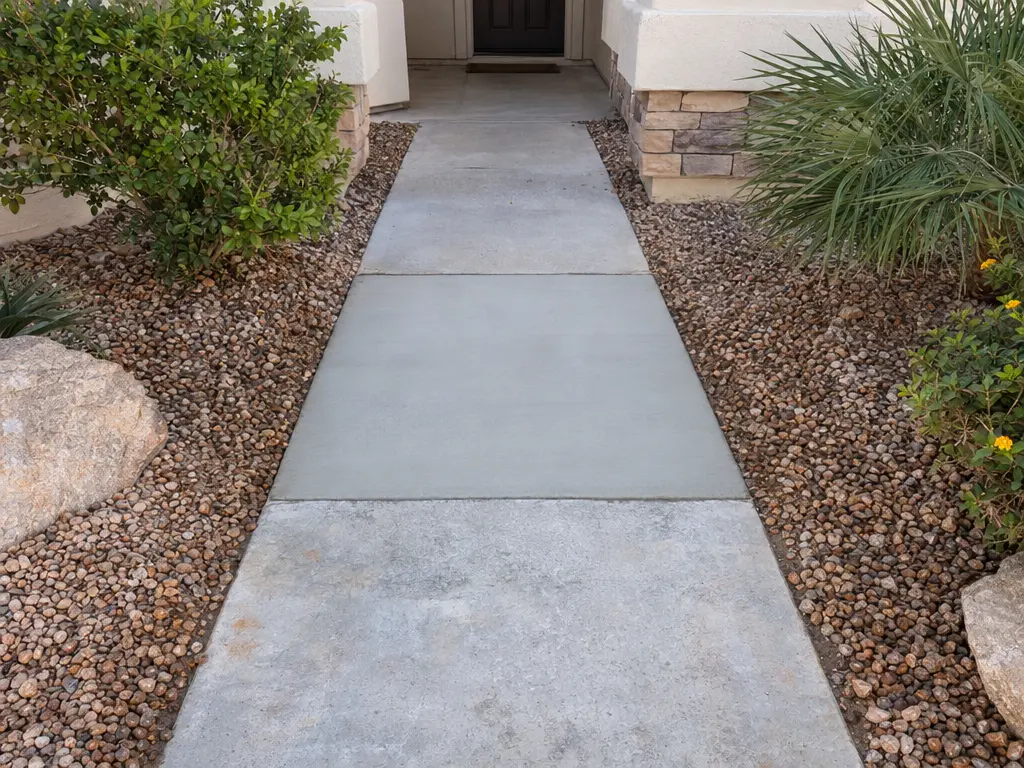
What a repair visit covers
Besides the crack itself, we check the sprinkler heads and drip lines nearest the slab, where yard water lands on a Las Vegas lot, and whether neighboring panels are moving too.
Finding the cause first
Backfill, clay, a caliche edge or plain shrinkage each need a different fix, so we look first.
Routing and sealing
Cosmetic shrinkage cracks get widened slightly and filled with a flexible sealant that keeps water out.
Epoxy or polyurethane injection
Epoxy bonds a crack that has stopped moving. Polyurethane flexes with one that still moves or stays wet.
Crack stitching
On a structural crack, metal staples set across the break tie both sides together and spread the tension.
Slab lifting
A sunken panel can be raised by pumping slurry or foam underneath it through drilled holes.
Spalled surface check
Where the top is flaking off, we look for reinforcing steel sitting too close to the surface.
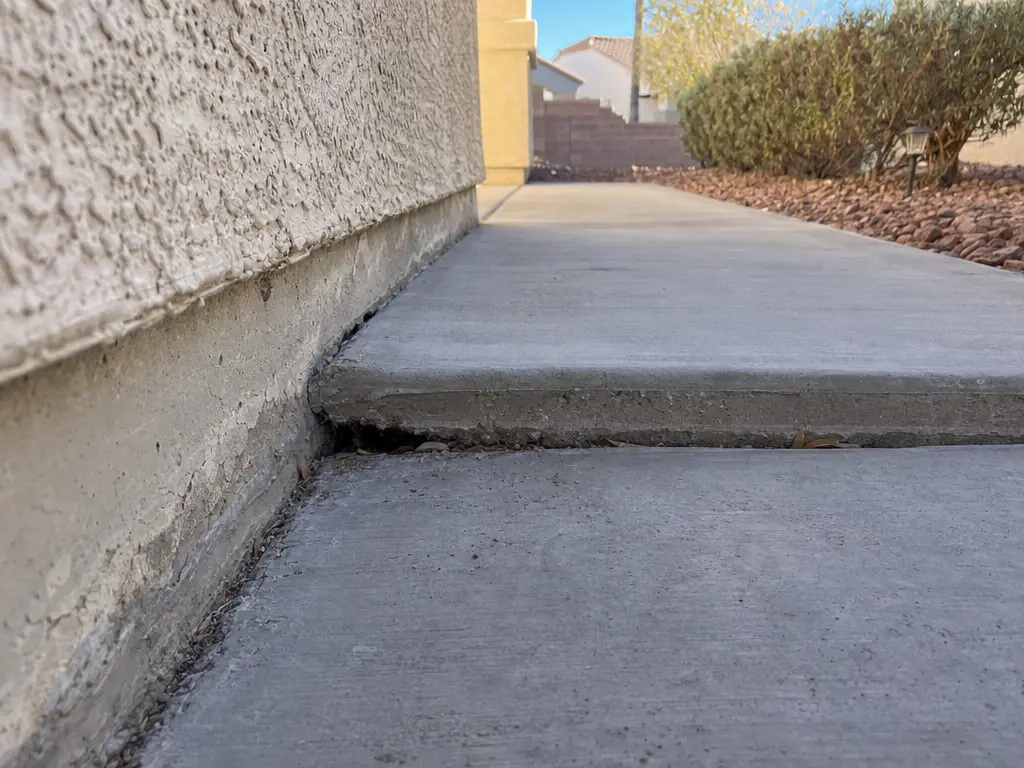
Why do older builder slabs sink and split in the valley?
Mostly it will be due to the ground beneath the slab. Builders backfill the trench around a new foundation. Flatwork poured on that fill next to the house is the classic spot for settling. A 2004 UNLV study notes expansive clay has been documented in the valley for years. Irrigation water soaking in next to the slab can cause it to expand pushing the panel up. Caliche can also be an issue. Having a hard layer of caliche next to softer soil will cause uneven support. This causes the slab to crack along the line. Yards in Enterprise can suffer from any of the three. Each will require a different repair so we will check the soil and water.
Sunk beside the house
Walks and patios poured over builder backfill against the foundation drop as that fill settles.
Split along one line
A crack running straight across a slab can trace where hard caliche meets softer ground underneath.
Mudjacking or foam: which lifts a sunken slab?
Both lift a sunken walk, patio or driveway panel by pumping material under it through drilled holes. The difference is what goes in and how much it weighs.
| What to compare | Mudjacking | Polyurethane foam |
|---|---|---|
| What goes under | Cement slurry with sand, mud or crushed stone | Two-part foam that expands and sets in about a minute |
| Hole size | Roughly 1 to 2 inches across | Roughly 5/8 inch, much smaller holes |
| Weight on the soil | Heavy, up to about 100 pounds per cubic foot | Light, about 2 to 4 pounds per cubic foot |
| Back in use | Roughly 24 to 72 hours after the lift | Usually the same day it is lifted |
| How long it lasts | Shorter, by most accounts, but figures vary widely | Said to last longer, mostly by foam sellers |
Concrete repair questions around Las Vegas
We hear these on most repair calls. Text us a photo with a tape measure across the crack for a straighter answer.
What is the best thing to fix cracks in concrete?
It depends on whether the crack is cosmetic, structural or still moving. Ordinary shrinkage cracks get routed and sealed with a flexible sealant. A structural crack that has stopped moving takes epoxy injection, and a working one takes polyurethane injection or metal stitching across it.
Why do store-bought crack fillers keep reopening?
They will simply fill the visible gap. The slab has moved for a reason (settling fill, expanding clay or uneven support) and it will continue to move once the caulk has cured. Stop it from moving and there is a good chance the crack repair will hold.
Why is my patio heaving up near the sprinklers?
Probably clay. Expansive soils have been documented around the Las Vegas Valley, and steady irrigation water next to a slab is what makes them swell. Move or cap the heads that soak the patio edge first, then we can judge whether that section gets repaired or replaced.
Does caliche under my yard cause cracks?
Yes. Caliche forms randomly so one end of the slab may be sitting on a rock hard layer while the other is sitting on softer soil. The softer side will settle causing the slab to crack along the line. If it is a thick even layer it can provide good bearing.
Why are chips flaking off the surface of my slab?
That is spalling, fragments breaking off the top under expansive pressure near the surface. A common cause is reinforcing steel set too shallow, which rusts, swells and pops the concrete above it. We check how deep the steel sits before choosing a patch or a new surface.
Should a crack that keeps moving get epoxy?
No. Cured epoxy is rigid, so on a crack that is still working it just moves the break into the concrete beside the repair. Moving or wet cracks take polyurethane injection, which flexes and can go into a damp crack, or stitching when the crack is structural.
Has a slab edge turned into a trip hazard?
Mark the raised lip with bright tape or set a planter on it, and shut off any sprinkler zone soaking that side. Then call, or text us a photo.
Call us(725) 502-1499